Learning becomes most impactful when children are able to see its relevance beyond the classroom. At an early age, experiences that mirror real life help students form stronger connections with concepts that might otherwise seem abstract. Keeping this philosophy in mind, our school recently organized a Supermarket Role-Play Activity for students from Montessori to Grade 4—an immersive learning experience designed to combine academics, social development, and life skills in a natural and enjoyable way.
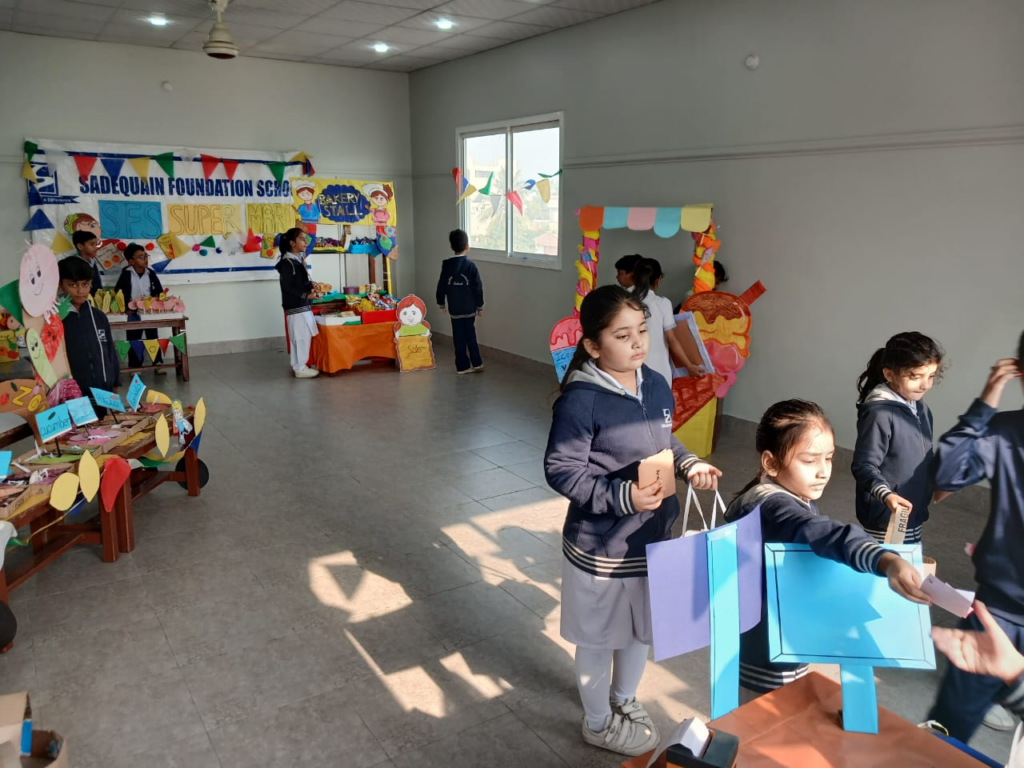
The idea behind the activity was simple yet powerful: to recreate a familiar environment that children encounter regularly and turn it into a meaningful learning opportunity. Supermarkets are a part of everyday life, and for young learners, they are places full of curiosity—rows of colorful fruits and vegetables, tempting bakery items, ice creams, and the excitement of choosing what to buy. By bringing this experience into the classroom, students were able to engage with learning in a way that felt intuitive and exciting rather than instructional.
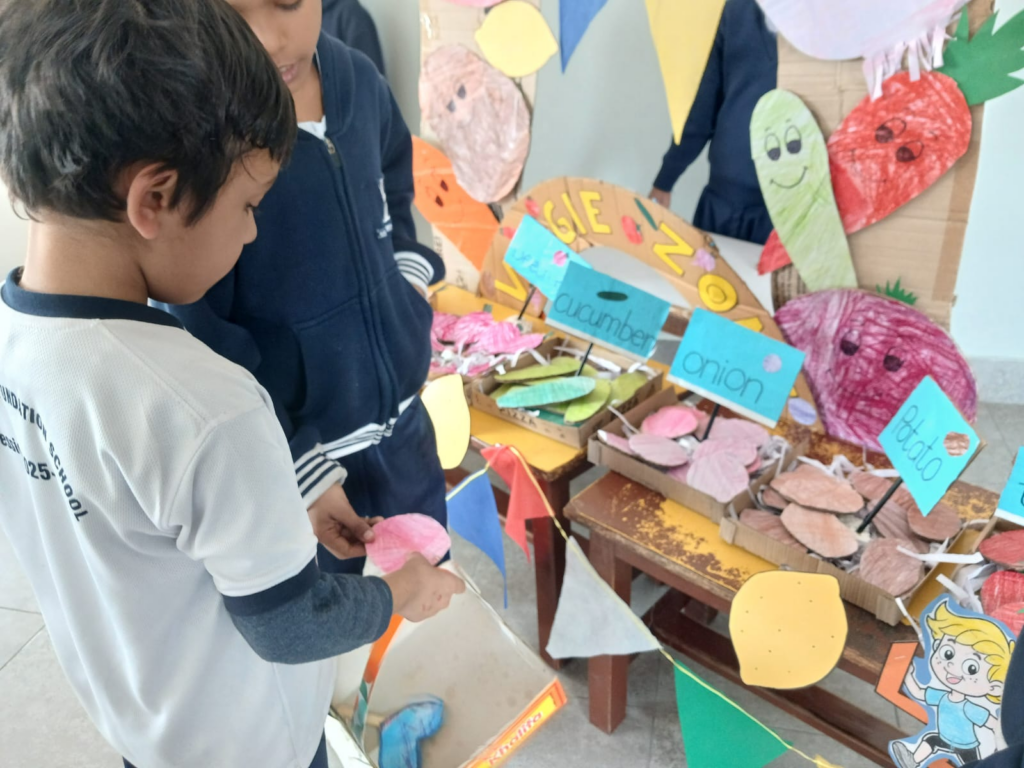
On the day of the activity, media room was transformed into a lively mini supermarket. Different stalls were carefully arranged to represent common food sections, including vegetable stalls, fruit stalls, bakery counters, and ice-cream corners. Each stall was stocked with realistic items, labels and play money, creating an environment that closely resembled a real shopping experience. The attention to detail immediately captured the students’ interest and set the tone for enthusiastic participation.
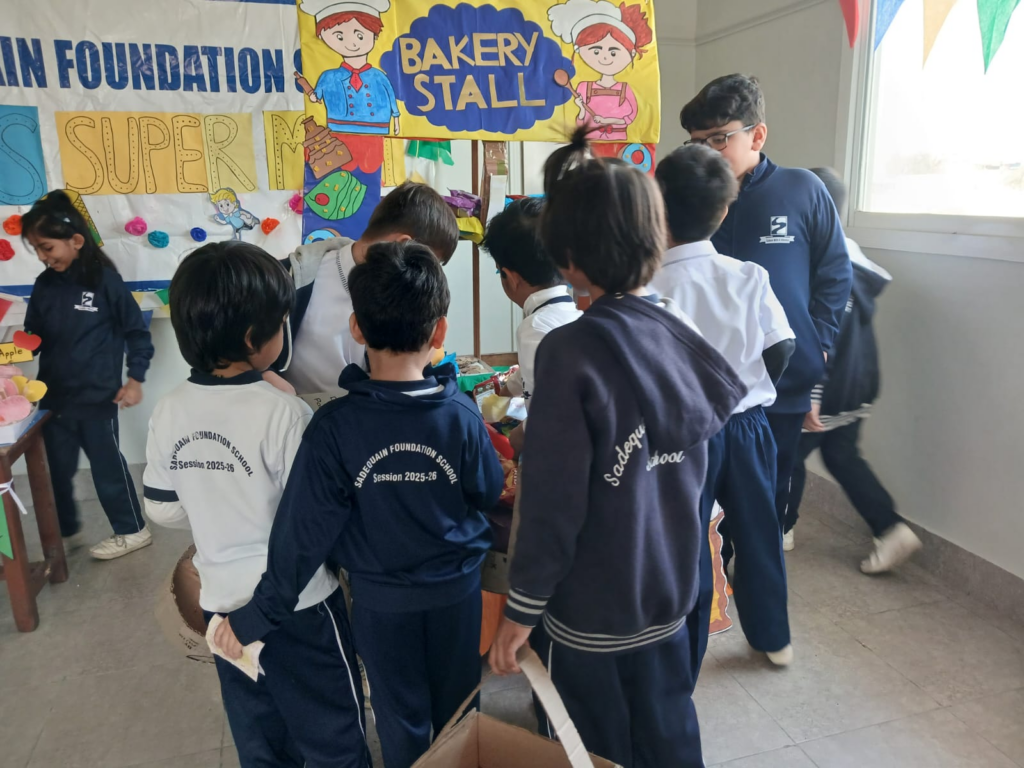
Students were encouraged to take on different roles—some became shopkeepers, while others acted as customers. This role distribution allowed every child to experience both sides of the buying-and-selling process. As shopkeepers, students learned to arrange items neatly, interact with customers, quote prices, and handle money responsibly. As customers, they practiced selecting items, asking questions, making choices within a budget, and completing transactions politely.
One of the most valuable aspects of the activity was the way it naturally developed communication skills. Students were guided to greet each other appropriately, use polite expressions, and engage in simple yet meaningful conversations. Phrases such as “Good morning,” “Please,” “Thank you,” and “Excuse me” were not merely taught but actively used throughout the activity. This practical application helped reinforce good manners and respectful communication in a way that felt genuine and purposeful.
Language development played a significant role in the learning process. As students interacted at different stalls, they were introduced to new vocabulary related to shopping, food items, quantities, and money. Words such as “price,” “change,” “fresh,” “expensive,” and “cheap” became part of their conversations. Repetition through real use helped students gain confidence in using this vocabulary independently, strengthening both their verbal expression and comprehension.
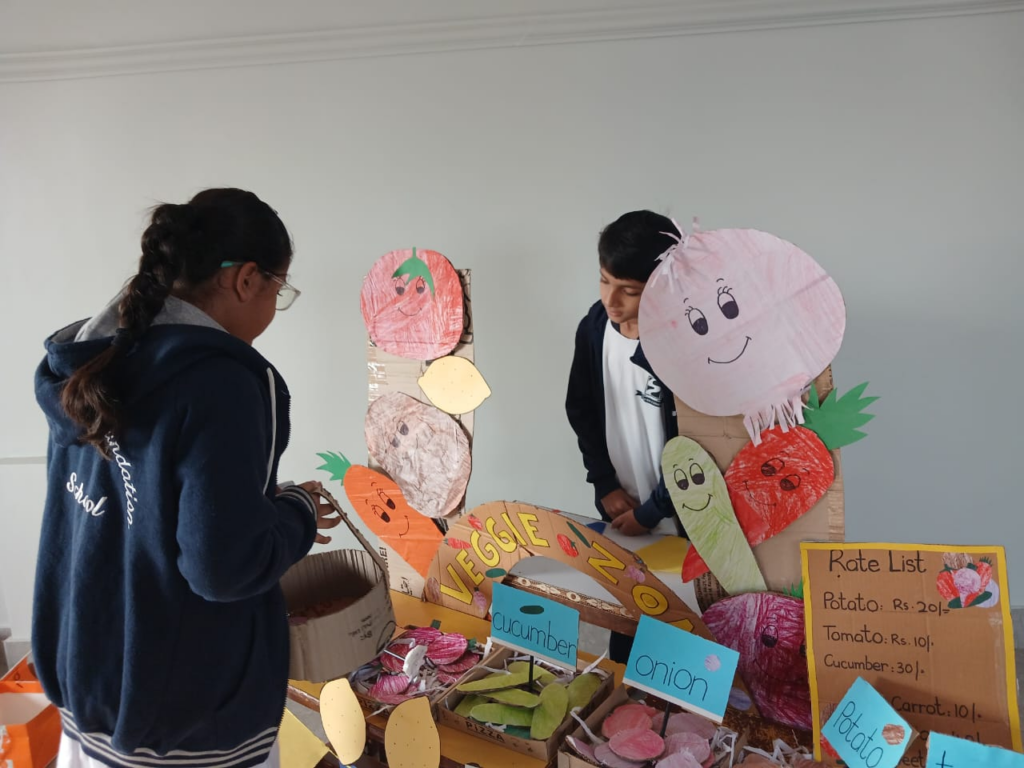
Mathematical learning was seamlessly integrated into the activity. Students practiced counting money, recognizing denominations, adding amounts, and understanding simple transactions. For younger learners, this involved identifying coins and notes and matching them to prices, while older students worked with slightly more complex calculations and budgeting decisions. These hands-on experiences helped demystify mathematical concepts and showed students how numeracy skills are used in everyday life.
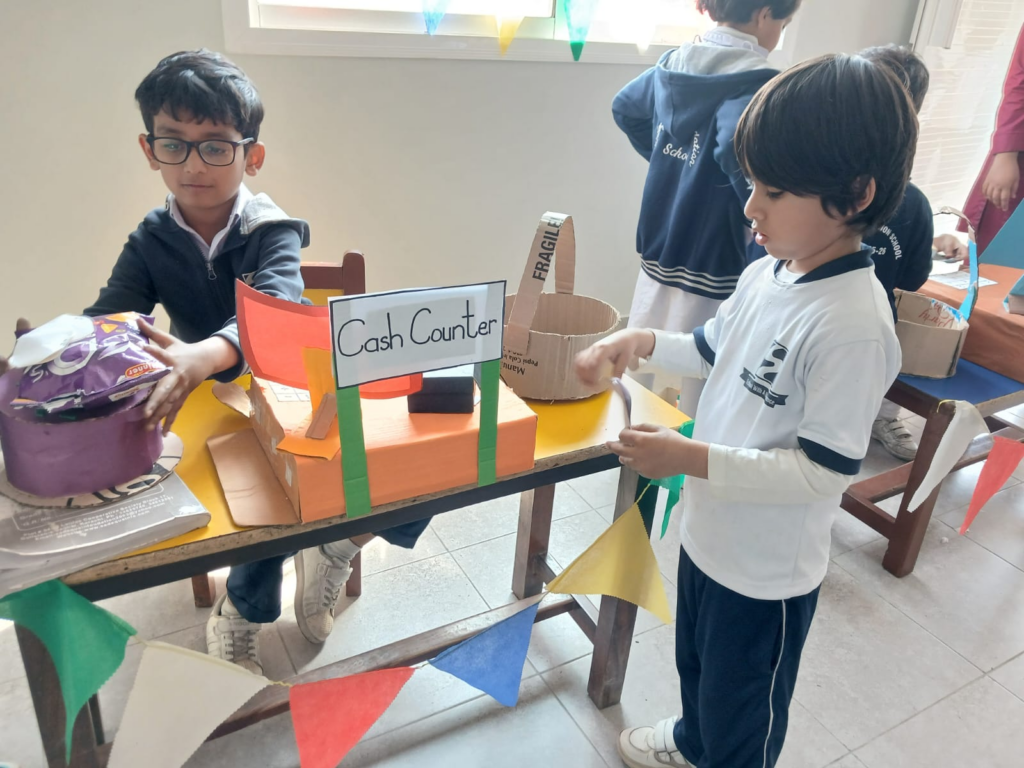
An important concept introduced during the activity was purchasing power. Students learned that having a fixed amount of money requires thoughtful decision-making. They were encouraged to think about what they could afford and make choices accordingly. This simple yet meaningful exercise helped develop early financial awareness and decision-making skills, laying the foundation for responsible habits in the future.
The activity also provided an opportunity to discuss food choices and healthy eating. As students visited different stalls, conversations naturally emerged about fruits, vegetables, and balanced diets. Teachers guided students to identify healthier options and understand the importance of making nutritious choices. These discussions were age-appropriate and interactive, helping children associate learning with real-world well-being rather than theoretical instruction.
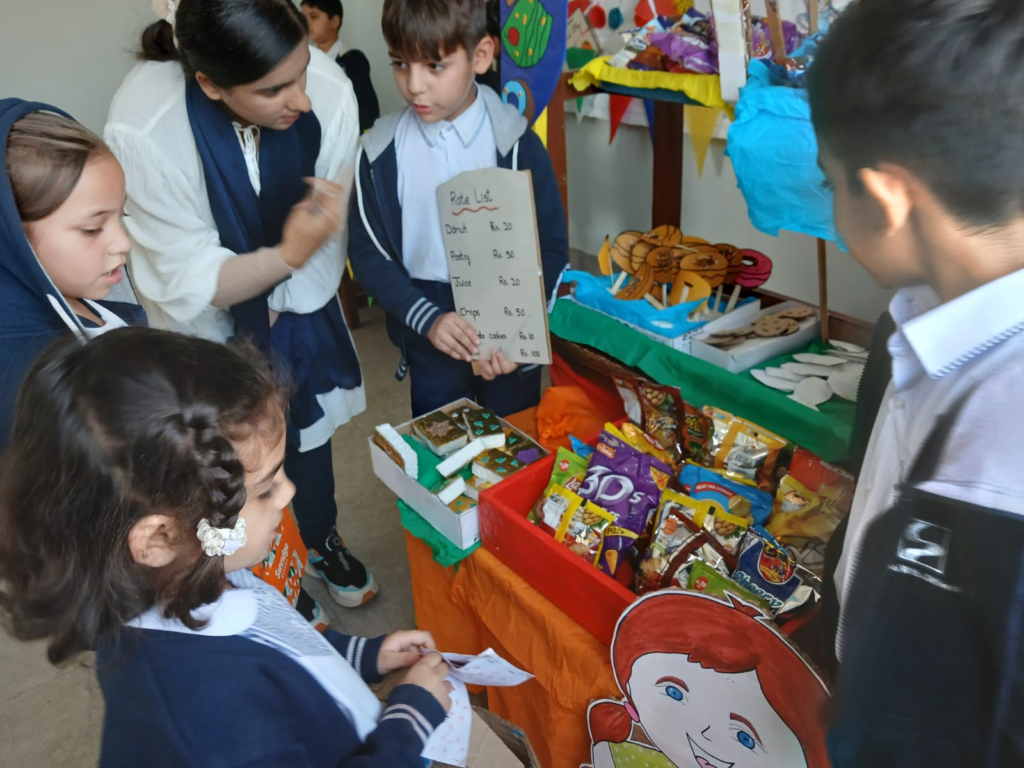
Social development was central to the Supermarket Role-Play Activity, as students learned the importance of queue discipline, taking turns patiently, and respecting personal space while waiting in line, listening attentively, and cooperating with their peers—small yet meaningful practices that play a crucial role in shaping positive social behavior. The role-play environment naturally encouraged collaboration and teamwork, with students working together to manage stalls, organize items, and resolve minor challenges, whether by helping a peer count money or gently reminding someone to wait their turn, thereby fostering a sense of shared responsibility and mutual respect. Confidence building emerged as another significant outcome, as many students—particularly younger ones who may hesitate to speak or take initiative—were provided with a safe and supportive space to express themselves, make decisions, and interact independently, leading to noticeable improvements in their willingness to participate and take ownership of their roles. For Montessori and early primary learners, the activity aligned perfectly with developmental needs by combining structured learning objectives with imaginative, play-based exploration, allowing students to experience firsthand how a supermarket functions rather than simply being told about it, making learning both memorable and meaningful.
Throughout the activity, teachers adopted a facilitative role by observing interactions, offering gentle prompts, and encouraging reflective thinking while allowing students the freedom to explore and learn through experience, thereby promoting independent thinking within a supportive framework. At the conclusion of the activity, students engaged in reflective discussions and creative expression, sharing what they enjoyed, what they learned, and how they felt about their roles—some expressing pride in managing money, others highlighting their enjoyment of interacting with classmates—reinforcing learning outcomes and helping them articulate their experiences.
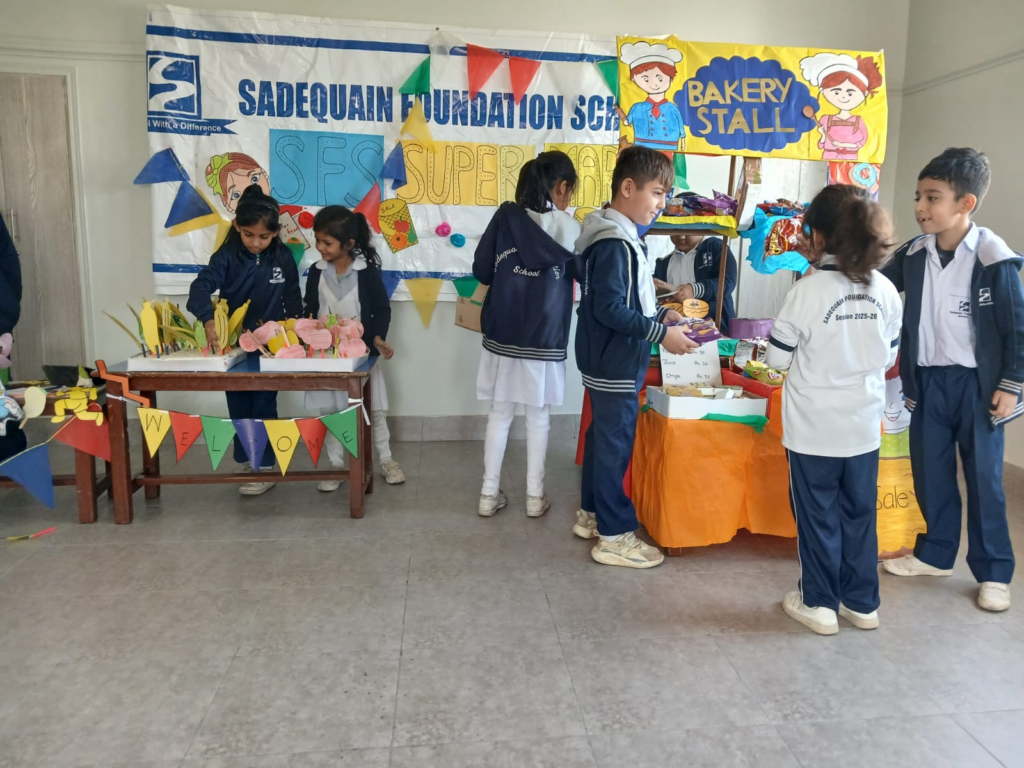
By the end of the Supermarket Role-Play Activity, students demonstrated clear progress, confidently identifying items from different food stalls, communicating politely, using newly acquired vocabulary, participating actively in buying and selling scenarios, understanding money usage within a given budget, and displaying responsible behavior in a public setting. Most importantly, the activity reinforced the idea that learning extends far beyond textbooks and worksheets and can be dynamic, interactive, and deeply connected to everyday life, enabling students to strengthen not only academic skills but also essential life skills. As a result, the Supermarket Role-Play Activity stands as a strong example of experiential learning supporting holistic development, blending academics with social interaction, communication, and practical application, and reaffirming the importance of creating learning environments where students feel engaged, confident, and valued—an approach that nurtures independent thinkers, confident communicators, and responsible individuals whose lessons in cooperation, decision-making, respect, and real-world application will remain with them long after the classroom returns to its usual setting.